The Timbaland Case: When a demoscene tune went to court
The story of "Acidjazzed Evening", "Do It" and how it ended — plus other plagiarism cases from the demoscene
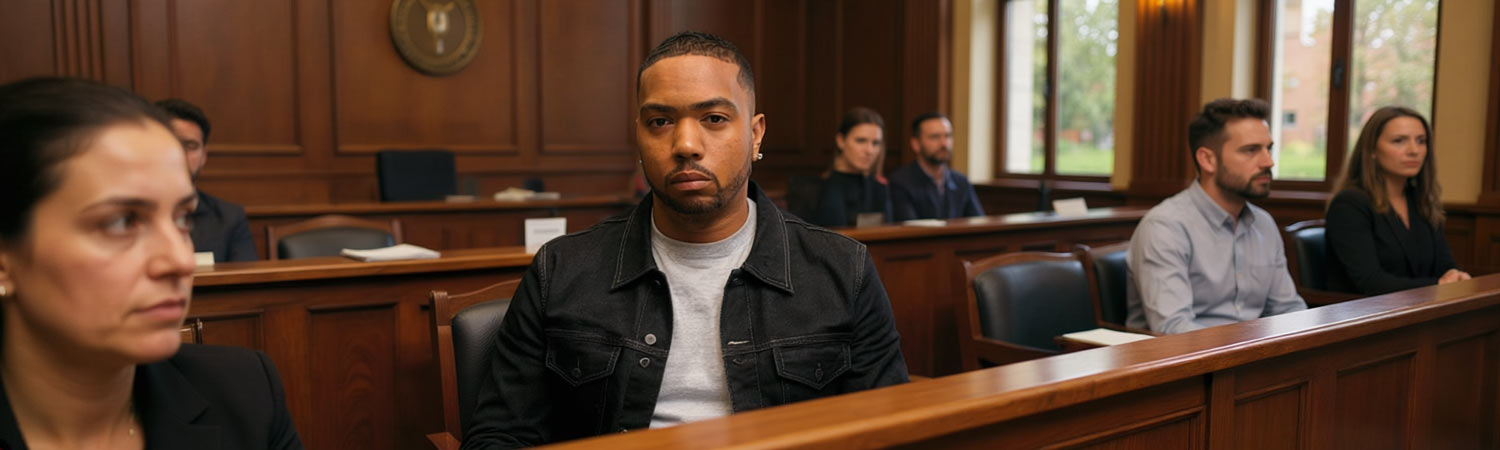
Most demoscene music stays inside the scene: heard at compos, archived on Mod Archive or Pouet.net, remembered fondly by a relatively small community. Every so often, though, a track escapes into the wider world in a way nobody expected. The best-known example is the story of a four-channel Amiga module made by a Finnish teenager in 2000, and how it ended up at the center of a multi-million-dollar lawsuit against one of the biggest producers in American pop music.
The Story
2000. Finnish demoscener Janne Suni, known by the handle Tempest and a member of the demo group Fairlight, composed a chiptune-style, four-channel Amiga module called "Acidjazzed Evening." The track won first place in the Oldskool Music competition at Assembly 2000, a major demoparty held in Helsinki.
2002. Norwegian musician Glenn Rune Gallefoss (known as GRG), with Suni's permission, made a new arrangement of the track for the Commodore 64's SID sound chip. The remix was published in the Australian disk magazine Vandalism News and, in December 2002, added to the well-known High Voltage SID Collection archive — making it freely downloadable online, years before anyone outside the scene had heard of it.
June 2006. Canadian singer Nelly Furtado released her album Loose, produced largely by Timbaland. One track, "Do It," used a melody, chord progression, and other musical elements that closely matched Gallefoss's SID arrangement of "Acidjazzed Evening." Sharp-eared listeners on Finnish demoscene forums reportedly noticed the resemblance as early as July 2006.
January 2007. The story went properly public when anonymous users posted YouTube videos comparing "Do It" side-by-side with "Acidjazzed Evening," making the similarity obvious to anyone listening. A second video also claimed Timbaland had used the same tune a year earlier for a ringtone called "Block Party." The story spread rapidly — Slashdot, Digg, and mainstream Finnish newspapers including Ilta-Sanomat all picked it up within days.
Asked about the accusations, Timbaland brushed them off publicly:
"That mess is so ridiculous. I can't really discuss it because it's a legal matter. But that's why people don't believe it. It's from a video game, idiot."
He later drew a distinction between "sampling" (using something you heard, possibly without knowing its source) and "stealing" — arguing his use fell into the former category.
2007–2008. Behind the scenes, Gallefoss pursued the matter through Finnish courts against Universal Music Finland; that case was reportedly narrowed down and ultimately did not succeed on its main claims. Meanwhile, the Finnish label Kernal Records Oy acquired the rights to Gallefoss's SID recording and arrangement in 2007, setting up a bigger legal fight on American soil.
June 2009. Kernal Records Oy filed a copyright infringement lawsuit in the U.S. District Court for the Southern District of Florida (Miami), naming Timbaland, Nelly Furtado, and their labels and publishers as defendants. The suit sought between $10 million and $20 million in damages, arguing that "Do It" used the "original and central identifying melodic, harmonic and rhythmic components" of "Acidjazzed Evening."
2011. U.S. Magistrate Judge Edwin Torres dismissed the case. The ruling turned not on whether the music sounded alike, but on a copyright technicality: the judge found that "Acidjazzed Evening" had first been published on the internet and had not been properly registered as a copyrighted work under U.S. law at the relevant time, which undercut Kernal's ability to sue for infringement in an American court.
How It Ended
In the end, nobody was found liable. The U.S. lawsuit was thrown out on a legal technicality around copyright registration rather than a ruling on the merits of the copying claim itself, and the related Finnish proceedings also failed to produce a finding against Universal Music Finland. Timbaland and Furtado never faced a trial verdict on whether the music itself had been plagiarized — the case ended on procedure, not on a judgment about the melody.
For Janne Suni and Glenn Rune Gallefoss, the episode left mixed feelings: real evidence that a piece of demoscene music had reached the biggest pop charts in the world, but no legal acknowledgment and no royalties to show for it. For the wider demoscene, the case became a cautionary, oft-retold story about how easy it is for niche, freely-shared music to be lifted by commercial artists who assume nobody outside a small community will ever notice — and how hard copyright law can make it to do anything about that after the fact.
It's worth noting a nuance often lost in retellings: what actually got used in "Do It" was Gallefoss's 2002 SID (Commodore 64) arrangement of Suni's original Amiga module, not the Amiga version itself. Both men were credited as originators of the melody in most contemporary reporting, even though only Gallefoss's specific recording is what ended up sampled.
Other Cases of Plagiarism in the Demoscene
The Timbaland case is the most famous, but it's far from the only time demoscene music has been lifted without credit or payment. The scene's culture of free sharing — modules and songs uploaded to public archives, meant to circulate hand to hand — has made it an easy, low-risk target for people looking for "obscure," "authentic"-sounding music to reuse.
Fitts for Fight (2006)
A Norwegian electronic duo built entire live sets around chip music lifted wholesale from other demoscene and "microscene" artists, performing the stolen tracks as their own. Once exposed, they were dropped from the Norwegian by:Larm festival lineup and removed from the Norwegian music talent platform Urørt.
Laromlab (2008)
An American musician calling himself a "chiptune maestro" released a self-titled album on the label Mushpot Records. Listeners quickly recognized that every track on the album was actually the work of the Atari ST chiptune collective YM Rockerz. Mushpot dropped him immediately, and he admitted the whole project was a hoax.
Crystal Castles (2008)
The Toronto band, known for incorporating 8-bit sounds into their music, released a track called "Insecticon" that the chiptune community identified as built almost entirely from the contents of a separate track released under a Creative Commons license — going well beyond what that license permitted, and rearranging the original's musical material rather than simply sampling a moment of it.
Jamba / Crazy Frog (mid-2000s)
The German ringtone company Jamba (branded Jamster internationally) used the track "In Rock 8-Bit" by the German chiptune group Bodenständig 2000 in television advertisements for its "Crazy Frog" ringtone, without ever contacting or paying the group. The group's publisher pursued legal action after fans in multiple countries independently noticed and reported the unauthorized use.
Purple Motion / "Planet-X" (undated, alleged)
It was alleged — though never formally tested in court — that an electronica act working under the name Planet-X, linked to a producer who had worked with Björk, used several well-known demoscene tracks, including Purple Motion's music from the legendary demo Second Reality, without permission or credit.
Commercial games using scene modules without credit (various)
Demoscene forums have documented more casual, lower-profile cases too — mobile and browser games quietly using tracker modules pulled straight from public archives like Mod Archive, without crediting or paying the original composers. One frequently cited example is a mobile game that used a track by Finnish musician Juha Kujanpää ("JustForBlues.mod") without any credit appearing in the game.
A pattern runs through most of these cases: because demoscene music is so easy to find, free to download, and largely unfamiliar to mainstream audiences and journalists, it has repeatedly looked like a "safe" source to quietly reuse — right up until the community that actually knows the music notices and speaks up.
Read More
- Timbaland plagiarism controversy — Wikipedia
- Janne Suni (Tempest) — Wikipedia
- "Do It" (Nelly Furtado song) — Wikipedia
- Judge Tosses Claim Over Hit Nelly Furtado Song — Courthouse News Service
- Timbaland, Nelly Furtado sued for plagiarism — MusicRadar
- Appropriations — CHIPFLIP (a running log of chipmusic/demoscene plagiarism cases)
- Chiptune Music Theft Continues — Create Digital Music
- Bodenständig 2000 — Wikipedia
- Pouet.net — the demoscene's central database.
- The Timbaland case – the plagiarism controversy