ST-01: The Sample Disk That Became "The Sound of the Amiga"
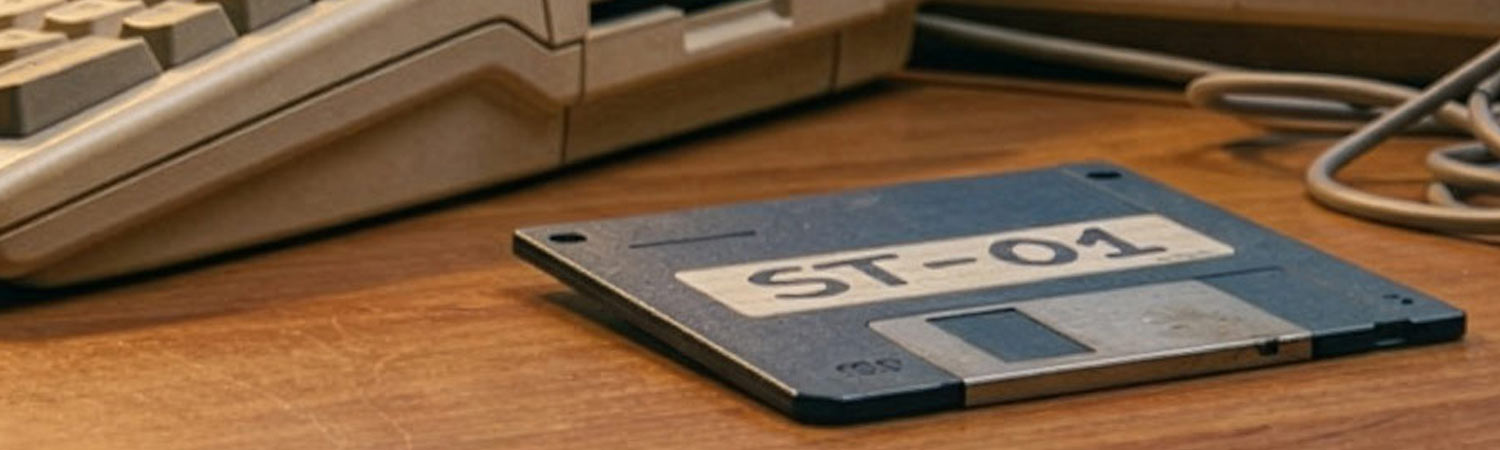
Most legendary pieces of music software are remembered for their interface or their feature list. ST-01 is remembered for something different: its sounds. It wasn't a program at all — just a single floppy disk of raw instrument samples — and yet it ended up defining the sonic identity of an entire computing platform for the better part of a decade.
Bundled, Not Built
In the summer of 1987, 22-year-old German developer Karsten Obarski programmed the Ultimate Soundtracker tool for the Amiga 1000, releasing it through the German software publisher EAS in December of that year. It was Obarski's first ever completed program, originally written so he could compose music for a friend's game.
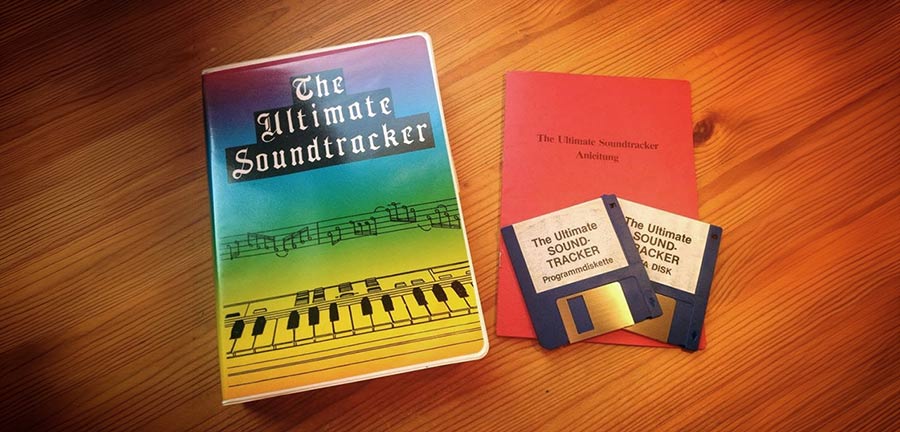
Ultimate Soundtracker didn't ship alone. Distributed alongside it came the sample disk ST-01, containing 126 sampled waveform instruments — audio samples which Obarski had ripped from his own synthesizers rather than generated in software. A second disk, ST-02, followed with additional sounds not long after, largely built from the same source material.
Where the Sounds Actually Came From
The ST-01/ST-02 samples weren't synthesized from scratch — they were short recordings lifted directly from a handful of specific late-1980s synthesizers and drum machines that happened to be sitting in Obarski's studio. The sounds were recorded from a few common synthesizers and drum machines available at the time, most notably:
- Roland D-50
- Yamaha DX21
- Casio CZ-101 / CZ-1000
- Roland Juno-106 (in some accounts)
The Roland D-50 in particular is historically significant in its own right — it pioneered what's known as Linear Arithmetic synthesis, combining sampled attack transients with subtractive synthesis and an overlaid looped sample, a hybrid sound that gave late-'80s pop and film music (Jean-Michel Jarre, Michael Jackson, Enya) its glassy, bell-like character. That same sonic DNA, sampled down to a few kilobytes, is what an entire generation of Amiga musicians grew up hearing.
Why It Mattered So Much
The significance of ST-01 has as much to do with the Amiga's hardware as with the samples themselves. The Amiga's built-in 4-channel sample playback meant hobbyist composers could create sample-based music without any external hardware — a real advantage at a time when sample playback of comparable quality was mostly limited to expensive dedicated music computers or hardware samplers. Suddenly, anyone with an Amiga and a copy of Soundtracker had, for free, the same basic sonic palette as synthesizers that cost real money.
Because ST-01's samples were bundled with the tool that practically invented the tracker format, they spread everywhere almost immediately. Thousands of kids started making music using the sounds from the two floppy disks that came with the program, and they were so heavily used that they became "the sound of the Amiga" for several years. These sounds became well known to Amiga users of a certain vintage, having appeared in many early Amiga games and demos, and are considered an essential part of the platform's sonic aesthetic.
From Bundled Freebie to Cultural Artifact
Ultimate Soundtracker itself had a short commercial life — it was released in December 1987, followed by a version 2.0 in October 1988 that formalized the now-famous MOD file format, after which Obarski effectively vanished from the Amiga scene entirely. But ST-01's samples outlived the software that shipped them by decades. Because early trackers stored their instrument samples directly inside each song file, the ST-01 sounds didn't just sit on a disk waiting to be loaded — they were physically copied into thousands of independently created and distributed MOD files throughout the late '80s and '90s, turning a bundled sample library into one of the most widely reproduced (and reused) sound sets in computing history.
That afterlife continues today. The samples have been preserved and re-released as WAV files by archivists, and modern software instruments — such as Chipslapper and Chipsounds — let producers load the original ST-01/ST-02 waveforms directly into a modern DAW. Community research projects have gone as far as to try to trace exactly which patches on which synthesizers produced the more recognizable of the 126 sounds, treating a decades-old sample disk with the same archival seriousness usually reserved for actual musical instruments.
A Strange Kind of Legacy
Karsten Obarski is most often credited as the "inventor of the tracker," and that's fair — Ultimate Soundtracker really was the first program to combine pattern-based sequencing with digital audio samples into a single, self-contained format. But ST-01 arguably had the longer cultural reach of the two. The software was quickly cloned, hacked, and superseded by tools like NoiseTracker and ProTracker within a couple of years. The sounds on that first sample disk, on the other hand, kept turning up in games, demos, and tracker modules for years afterward, largely because nobody had a reason to stop using them — they were free, they were already loaded on countless computers, and they simply were what Amiga music sounded like.
It's a rare case in computing history where a piece of hardware's signature sound came not from its chip, but from a stranger's synthesizer, sampled onto a single 3.5-inch floppy and handed out for free.
Curious to hear the originals? The ST-01/ST-02 sample sets have been preserved as WAV files on the Internet Archive, and plenty of early Amiga MOD files built entirely from them are still playable today through modern MOD players.
Further Reading
Historical writeups
- Soundtracker origins, part 1: Where in the World is Karsten Obarski? — a well-researched deep dive into Obarski himself, tracing what happened to him after he vanished from the Amiga scene.
- Celebrating ST-01 and ST-02 (CHIPFLIP) — covers the disks' cultural impact and links out to further listening.
- Computer Music: tracker history (Nameless Algorithm) — good context on where ST-01 sits in the broader tracker family tree, plus a chronological list of other trackers.
Sample archaeology
- Project ST-01: The instruments behind the historic ST-01 sample disk revealed (ModArchive) — attempts to trace exactly which synth patches the samples were recorded from.
- Soundtracker ST-01 original synthesizer source (Polynominal) — focused specifically on identifying the source synthesizers.
- Soundtracker ST-01 : Deep dive into the sounds.
Actually hearing/using the samples
- Amiga Soundtracker Sample Packs (ST-XX) (Internet Archive) — the original ST-01/ST-02 samples re-archived as WAV files.
- ST-XX samples, 8192Hz-tuned version (Internet Archive) — a retuned variant, useful if you're loading them into a tracker or microcontroller project (built for the Mozzi audio library).
- Aminet mods/inst archive — where the original LHA sample disk files are hosted for direct download.
- Chipslapper and Chipsounds — modern software instruments/plugins that let you load the original ST-01/ST-02 waveforms directly into a DAW.
Related discussion
- Gearspace forum: libraries and sample packs from the 80s and 90s — a broader community discussion that gets into ST-01's synth sources and its place among other era sample libraries.