Rob Hubbard: The pioneer who defined video game music
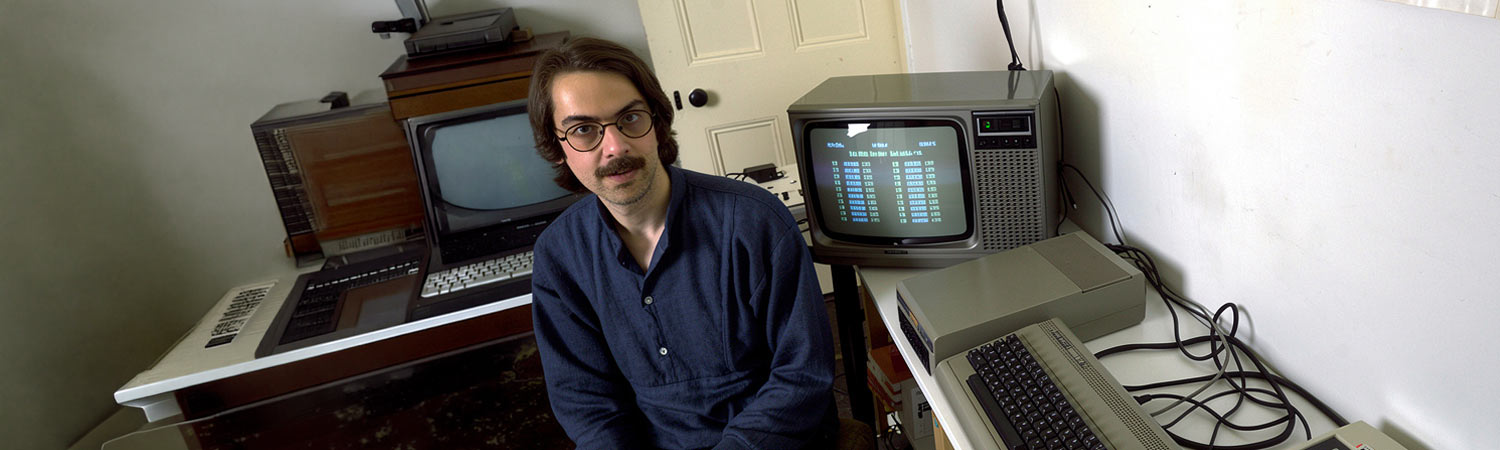
When discussing the legends of video game music, few names command as much respect as Rob Hubbard. During the 1980s, his compositions transformed the way players experienced games on the Commodore 64. At a time when most games featured simple beeps and repetitive melodies, Hubbard created sophisticated, energetic soundtracks that pushed the machine’s hardware far beyond what many believed possible.
His work inspired an entire generation of composers, demo musicians, and tracker artists. Even today, decades after his first releases, his music continues to be remixed, studied, and celebrated worldwide.
Early Life
Rob Hubbard was born in 1955 in the United Kingdom. Before entering the video game industry, he trained as a musician and worked professionally as a keyboard player. His formal musical education gave him a strong understanding of harmony, orchestration, and composition—skills that would later distinguish his game music from that of many of his contemporaries.
Unlike many early game composers who came from programming backgrounds, Hubbard approached computer music primarily as a musician. This perspective allowed him to compose pieces with memorable melodies, rich harmonic structures, and dynamic arrangements.
Discovering the Commodore 64
Released in 1982, the Commodore 64 featured one of the most advanced sound chips of its era: the SID (Sound Interface Device), designed by engineer Bob Yannes.
The SID chip offered:
- Three independent audio channels
- Multiple waveform types
- Programmable envelopes
- Analog filters
- Ring modulation
- Oscillator synchronization
Although impressive, programming the SID required considerable technical skill. Hubbard quickly mastered its capabilities and developed programming techniques that gave the illusion of more than three voices playing simultaneously.
Revolutionizing Video Game Music
Before Hubbard’s arrival, many computer games contained short loops or very simple tunes. Hubbard introduced a cinematic approach to game music.
His compositions featured:
- Multiple musical sections
- Strong melodies
- Counterpoint
- Dynamic bass lines
- Intricate percussion effects
- Advanced arpeggio programming
- Expressive vibrato
- Rapid instrument changes
His music often sounded far richer than the hardware specifications suggested.
Famous Soundtracks
Commando (1985)
Perhaps Hubbard’s most iconic work, Commando remains one of the defining pieces of Commodore 64 music.
- A heroic opening theme
- Driving bass
- Fast arpeggios
- Memorable melodies
- Excellent use of SID filters
Many enthusiasts still consider it among the greatest game tunes ever written.
Monty on the Run (1985)
Often regarded as Hubbard’s masterpiece, Monty on the Run showcases extraordinary technical skill.
- Constantly evolving melodies
- Complex harmonies
- Layered musical ideas
- Sophisticated tempo changes
- Remarkable use of only three channels
The piece remains a benchmark for SID composition.
International Karate
This soundtrack combines martial energy with melodic elegance. Its memorable theme became instantly recognizable among Commodore players and remains one of Hubbard’s signature compositions.
Sanxion
The loading music for Sanxion surprised players before the game even began. Many fans spent several minutes simply listening to the title tune—a relatively new experience at the time.
Delta
The soundtrack to Delta demonstrated Hubbard’s growing maturity as a composer. Its atmospheric introduction, evolving harmonies, and energetic rhythms showed that video game music could be both technically impressive and emotionally engaging.
Other Notable Works
Rob Hubbard composed music for dozens of classic games, including:
- Thing on a Spring
- Skate or Die!
- Spellbound
- Master of Magic
- Zoids
- One Man and His Droid
- Crazy Comets
- Confuzion
- Action Biker
Each score explored new musical ideas and programming techniques.
Technical Innovations
Although Hubbard did not use music trackers during his Commodore 64 years, many techniques later became standard practices among tracker musicians.
- Fast software arpeggios
- Complex instrument macros
- Pulse-width modulation
- Rich bass programming
- Dynamic filtering
- Efficient memory usage
- Expressive envelopes
Many tracker composers later emulated these techniques in software such as GoatTracker, SID-Wizard, FastTracker II, and Impulse Tracker.
Influence on the Demoscene
Hubbard’s music had a profound influence on the emerging demoscene.
Countless musicians studied his routines to understand:
- Instrument programming
- Melody writing
- SID effects
- Musical structure
Many famous scene musicians cite Hubbard as a major inspiration, including composers who would later become well known in the Amiga and PC tracker communities.
Transition Beyond the Commodore 64
As the gaming industry evolved, Hubbard composed for additional platforms including consoles and arcade systems. He later worked with game studios on larger-scale projects, adapting to new hardware while maintaining his melodic style.
Although technology advanced dramatically, many fans continue to regard his Commodore 64 period as the pinnacle of his creative output.
Lasting Legacy
Today his music is:
- Performed by orchestras
- Arranged by contemporary musicians
- Remixed by SID enthusiasts
- Featured at retro gaming events
- Studied by aspiring game composers
- Celebrated within the demoscene
His compositions continue to inspire artists working with both vintage hardware and modern tracker software.
Rob Hubbard and the Tracker Community
While Hubbard himself is best known for composing directly for the SID chip rather than using trackers, his musical style profoundly shaped tracker culture.
Many MOD, XM, S3M, and IT composers drew inspiration from his:
- Strong melodic writing
- Energetic bass lines
- Clever use of limited channels
- Memorable hooks
- Technical creativity
His influence can still be heard in countless modules shared across the tracker scene.
Interesting Facts
- Rob Hubbard composed some of the most celebrated music ever written for the Commodore 64.
- Monty on the Run is frequently ranked among the greatest SID tunes of all time.
- He demonstrated that memorable music could thrive despite severe hardware limitations.
- His work helped elevate video game music from a technical novelty to an expressive art form.
- Decades later, his compositions remain staples at retro gaming festivals, SID concerts, and remix competitions.
Conclusion
Rob Hubbard is more than a celebrated composer—he is one of the architects of modern video game music. His pioneering work on the Commodore 64 proved that technical constraints could inspire extraordinary creativity. By combining musical craftsmanship with deep technical understanding of the SID chip, he created soundtracks that continue to captivate listeners over forty years later.
For visitors to Soundtracker Museum, Rob Hubbard’s career represents a vital chapter in the history of computer music. Although his work predates the widespread adoption of music trackers, the techniques, melodies, and spirit of innovation that define his compositions laid much of the creative groundwork for the tracker scene that followed. His legacy lives on in every composer who transforms limited hardware into unforgettable music.
Additional links
- C64-Wiki: Rob Hubbard — detailed technical/biographical writeup, including his sample-playback tricks and favorite tunes.
- VGMPF Wiki: Rob Hubbard — very thorough entry covering his gear, technique, and full game credits.
- Grokipedia: Rob Hubbard — covers his later career, honors (Abertay University honorary doctorate), and live orchestral performances of his work.
- Academic Kids: Rob Hubbard — shorter overview with additional links.
Interviews
- sidmusic.org: Interview with Rob Hubbard — a classic Happy Computer magazine interview, Hubbard in his own words about specific tunes and technique.
- Remix64: Rob Hubbard composer profile — bio plus links to remixes of his work.
Music & Preservation
- c64audio.com — Hubbard's own publisher/record label site, home to 8-Bit Symphony and the "Project Hubbard" biography book.
- 8-Bit Symphony: Rob Hubbard — covers his orchestral re-recordings and the "Hubbard'80" concept album.
- Press Play on Tape — the Danish live band known for full rock-band covers of his C64 tunes like Commando and Monty on the Run.
Broader Context on His Role in SID History
- Atlantis Prophecy: "The Brief History of SID" — places Hubbard's arrival in 1985 in the context of the whole SID scene's evolution, including how his playback routine influenced later editors.