Mods Anthology: the greatest tracker music compilation ever made
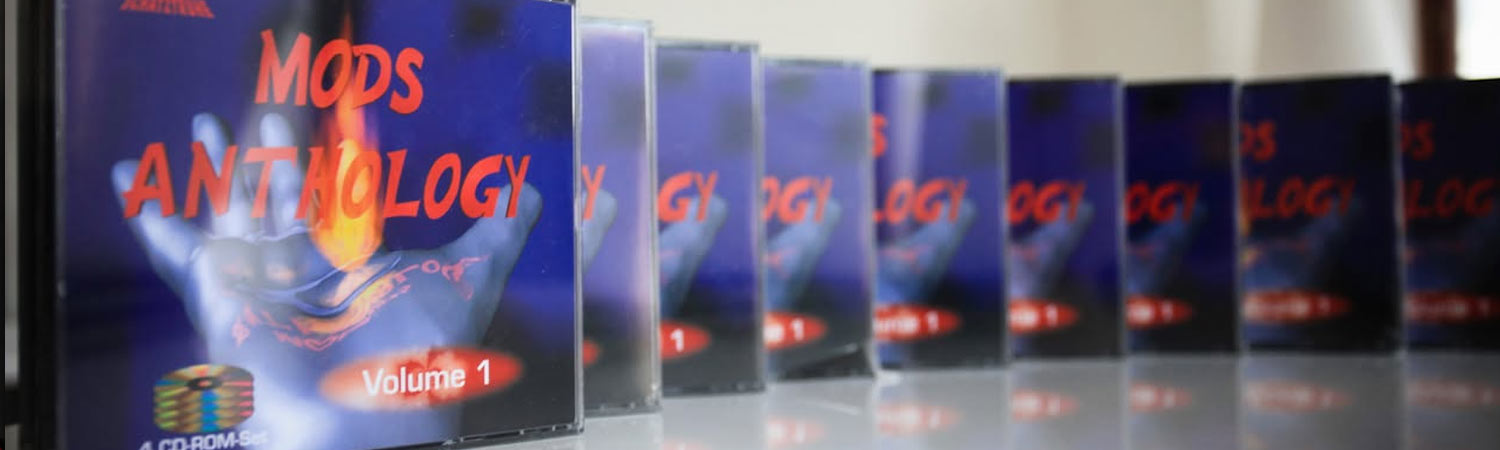
In 1996, one man spent six years collecting over 18,000 module files and six months tracking down their creators — producing a 4-CD monument to the golden age of computer music.
What is Mods Anthology?
Before streaming, before MP3s, before even the CD as a music format was ubiquitous, a parallel musical universe flourished on home computers. Tracker music — digital compositions made by sequencing short audio samples across channels in a "module" file — was the sound of the demoscene: a global subculture of programmers, artists, and musicians who competed to create stunning audiovisual programs on machines like the Commodore Amiga.
Mods Anthology is the most comprehensive archive of this era ever assembled. Created by Nicolas Franck (aka Gryzor/Dreamdealers) and published in 1996 by Stefan Ossowski's Schatztruhe, it spans the entire lifespan of tracker music from its earliest origins to the mid-1990s — sorted by composer, accompanied by photos and interviews, and distributed on four CD-ROMs playable on Amiga, DOS, Windows, Mac, and Unix alike.
It was sold in France for 220 FF (roughly €50) and is long out of print on physical media. Today, the ISO images of all four discs are freely available on the Internet Archive, preserved for anyone who wants to hear what computer music sounded like before the internet changed everything.
Multiplatform from day one. The discs were readable under MS-DOS, Windows, Mac, Unix, and AmigaOS 3.0 — a deliberate choice that made the compilation accessible far beyond the Amiga community that produced most of its music.
The four discs
- Disc 1 : Authors A – F : Composers from the early demoscene, alphabetically sorted with photos and info files
- Disc 2 : Authors G – Q : Mid-alphabet composers spanning the scene's most creative peak years
- Disc 3 : Authors R – Z & Groups : Remaining composers, plus modules attributed to scene groups rather than individuals
- Disc 4 : Synthetics & Exotica : Amiga synth tunes, C64 SID via PlaySID, and formats outside the standard MOD ecosystem
Disc 4 is a particular treasure: it houses the PlaySID collection — a vast archive of Commodore 64 SID chip tunes playable through the Amiga's soundcard — bridging two generations of 8-bit and 16-bit computer music in one place.
Formats preserved
The compilation is deliberately multiformat, covering every significant tracker format of the era. All files are stored uncompressed with full long filenames — no truncated 8.3 DOS names.
To play these files, the compilation includes DeliTracker — one of the most versatile module players ever written for the Amiga — along with players for every other supported machine. Amiga Guides linked directly to DeliTracker playlists, making browsing feel closer to a modern music app than a CD-ROM archive.
Six years of collecting, six months of contacting
What makes Mods Anthology more than just a data dump is the human effort behind it. Gryzor didn't simply scrape bulletin boards and FTP sites — he reached out to composers individually, asking permission to include their work, gathering biographical information, tracking down photos, and unearthing previously unreleased modules from some of the scene's most celebrated musicians.
The result is an anthology in the truest literary sense: not just a collection, but a curated historical record with liner notes in spirit, if not always in print.
Many modules on the set had never been publicly released before. For fans of composers like Purple Motion, Lizardking, or Skaven, Mods Anthology was the closest thing to a career retrospective those artists ever received.
A brief timeline of tracker music
- 1987 : Karsten Obarski releases Ultimate Soundtracker for the Amiga, inventing the .MOD format and the tracker paradigm.
- Late 1980's : Demoscene groups across Europe adopt MOD music as the soundtrack to their demos. The scene explodes on the Amiga 500.
- Early 1990s : Formats multiply: ScreamTracker, FastTracker, and Impulse Tracker bring tracker music to DOS PCs, expanding the composer pool worldwide.
- 1993–1995 : Peak creative era. Legendary composers like Purple Motion and Skaven produce works still celebrated today. The .MOD Archive begins collecting files online.
- 1996 : Mods Anthology is published — a definitive closing statement on the era, as MP3 and the commercial internet begin to reshape digital audio.
- 2012 : All four disc ISOs are uploaded to the Internet Archive, making the collection freely available to the public for the first time since it went out of print.
- 2020 : The demoscene is declared a UNESCO intangible cultural heritage, officially recognising the cultural significance of the tradition Mods Anthology helped preserve.
Why it still matters
The demoscene was declared a UNESCO intangible cultural heritage in 2020, and with good reason: it represents a unique moment when creative culture and computational constraint produced something genuinely new. Tracker music is a core part of that heritage — a form where composers worked within strict limits of four to eight channels, small sample sizes, and limited RAM to produce music of extraordinary expressiveness.
Mods Anthology remains the single most complete snapshot of that tradition. Its 18,000 modules represent thousands of hours of music that would otherwise be scattered across dying floppy disks, defunct BBS servers, and degraded tapes. That it exists at all — let alone assembled with such care for the composers behind the work — is a small miracle of cultural preservation.
For anyone curious about where computer music came from, or who wants to hear what a Commodore Amiga could do in the hands of a teenager in Helsinki or Düsseldorf in 1991, Mods Anthology is the place to start.
Sources: Internet Archive · ami64.com · Demoscene UNESCO heritage recognition : Originally published 1996 · Stefan Ossowski's Schatztruhe
list of links related to Mods Anthology and the wider tracker/demoscene music ecosystem:
- Mods Anthology on Facebook → https://www.facebook.com/modsanthology/
- Mods Anthology official website → http://hlsite.free.fr/modsanth/
The 4 discs on Internet Archive (free download)
- Disc 1 (Authors A–F) → https://archive.org/details/cdrom-amiga-mods-anthology-1
- Disc 2 (Authors G–Q) → https://archive.org/details/cdrom-amiga-mods-anthology-2
- Disc 3 (Authors R–Z & Groups) → https://archive.org/details/cdrom-amiga-mods-anthology-3
- Disc 4 (Synthetics & Exotica) → https://archive.org/details/cdrom-amiga-mods-anthology-4
Related tracker music resources
- The Mod Archive — one of the largest and oldest online module collections, collecting music since 1996 → https://modarchive.org
- Mazemod — a web radio dedicated to Amiga & tracker music culture, streaming various styles of computer electronic music from the demoscene → https://www.mazemod.org
- AmigaremixAmigaremix — remixed Amiga mods → https://www.amigaremix.com
- Amiga Music Preservation (AMP) — huge archive of Amiga musicians → https://amp.dascene.net
- Modland FTP — massive tracker archive searchable by author → https://modland.com
- Pouët — extensive listing of intros and demos from multiple platforms → https://www.pouet.net
- scene.org — the central demoscene file archive → https://scene.org