Martin Galway: The composer who made the Commodore 64's SID chip sing
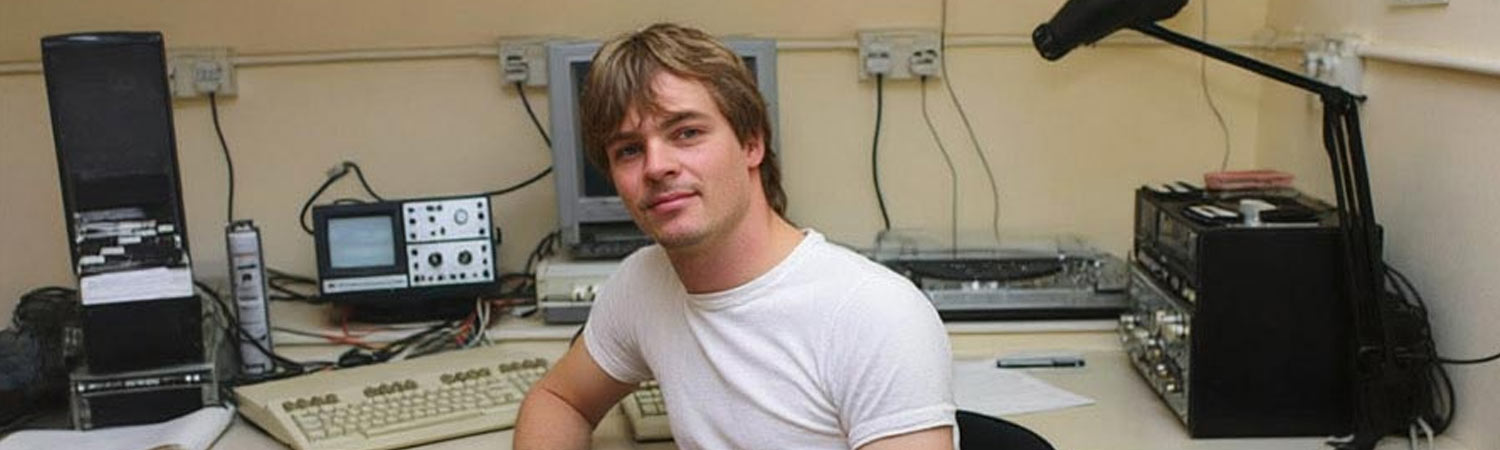
Long before orchestral scores and streaming soundtracks, a teenager in Manchester was coaxing three-voice harmonies out of a sound chip never designed for music. That teenager was Martin Galway, and by the mid-1980s his name was as recognizable to Commodore 64 owners as the games his tunes accompanied.
Early Life
Martin Galway was born on January 3, 1966, in Belfast, Northern Ireland. When he was five, his family moved to Manchester, England. His father was a music teacher and gave him early lessons in flute, violin, clarinet, and piano, though Galway wasn't particularly interested at the time. He grew up listening to rock music and electronic artists such as Jean-Michel Jarre, Tangerine Dream, Depeche Mode, and Thomas Dolby, influences that later shaped his own compositions. He is also the nephew of the celebrated classical flautist Sir James Galway.
At 16, Galway began spending time in his high school's small computer lab, and by 17 he was writing music and games on a BBC Micro alongside classmates at Parrs Wood High School. A connection through a former teacher led the group to Optima Software, where Galway's first professional music was published. With the money he earned, he bought his own computer and taught himself to program further.
Joining Ocean Software
While pitching a friend's game (a Pac-Man clone) to Ocean Software, Galway also offered his BBC Micro music. Ocean told him there was little market for BBC music, but they were looking for a Commodore 64 composer based nearby, since their existing supplier lived inconveniently far away in Portsmouth. Ocean lent Galway a full C64 assembly language development system along with another programmer's driver code to study. He taught himself the machine's SID sound chip from there, working first as a freelancer before quitting college in early 1985 to join Ocean full time.
Mastering the SID Chip
The SID chip offered composers just three audio channels, no built-in way to sustain a full chord, and a limited set of waveforms. Galway treated these restrictions as a creative puzzle. He became known for pushing the hardware past its intended limits:
- Rapid arpeggios on a single channel that tricked the ear into hearing sustained chords
- Heavy use of the chip's ring modulation feature to create metallic, otherworldly tones
- Changing register settings while a note was still playing, producing the shimmering, echo-like sound that became his signature
- Writing his own custom music driver rather than relying on the one Ocean originally gave him
In February 1987, Galway became the first SID composer to use four voices at once by discovering an American sample-playback technique called Digi-Drums, which let him add a rough drum sample on top of the chip's usual three channels. He has joked that he didn't fully understand the underlying sample data at first and simply experimented with numbers until the drums stopped sounding like "farts and burps." By the time he scored Game Over later that year, his sampled percussion had become far more polished.
Notable Works
Arkanoid (1987)
Galway's loading screen theme for the C64 conversion of Arkanoid is often cited as the first Commodore 64 game music to include real sampled drums, achieved through his Digi-Drums experiments.
Wizball (1987)
Composed for the Sensible Software title, Wizball's soundtrack is frequently named as one of Galway's finest achievements, admired for its melodic warmth and inventive use of the SID chip's tonal range.
Comic Bakery (1984)
Featuring a memorable bassoon-like solo voice, this soundtrack remains one of Galway's most fondly remembered early works and is still performed by chiptune orchestras today.
Rambo: First Blood Part II (1985)
Galway has singled out the opening of this title's music as an example of him deliberately searching for sounds nobody had heard on the C64 before. It remains one of his most celebrated pieces.
Green Beret (1986)
Galway wrote both a slow, atmospheric loading tune and a bombastic title theme for Green Beret. The title tune received a poor review in Zzap!64 magazine at the time, but it went on to become a fan favorite despite Galway's own mixed feelings about it.
Parallax (1986)
Another collaboration with Sensible Software, Parallax's high-score tune is remembered for its unusual, almost experimental ending, something Galway has described as a strange effect he felt compelled to work out and finish.
Ocean Loader 1 & 2
Because loading a game from cassette tape could take several minutes, Ocean used that idle time as a stage for music. Galway's Ocean Loader tunes played during these long waits and became some of the most recognizable jingles of the era, arguably reaching more listeners than many of the games they introduced.
Other C64 credits
Galway also composed or arranged music for Terra Cresta, Miami Vice, Athena, Combat School, Mikie, Yie Ar Kung-Fu, Yie Ar Kung-Fu II, Match Day, Microprose Soccer, Ping Pong, Slap Fight, Hunchback II, Kong Strikes Back, Insects in Space, Roland's Ratrace, Swag, and Game Over, among others.
Beyond the Commodore 64
As the C64 gave way to newer hardware, Galway's career moved with it. He relocated to Austin, Texas, to work for Origin Systems, contributing music and occasional design work to titles including Times of Lore and entries in the Wing Commander series, such as Strike Commander and Wing Commander II. He also worked briefly on Amiga music that was never used in a released game, and produced music for early Game Boy, NES, and SNES titles during his time at Origin.
In later years, Galway worked in audio direction, including a stint at Cloud Imperium Games on the PC title Star Citizen. Despite this long career, he has said that most people who recognize his name still associate him primarily with his 1980s Commodore 64 output.
Style and Reflections
Galway has described his musical approach as an attempt to bring out the SID chip's smoothest and most flowing qualities, in contrast to composers like Rob Hubbard, who was known for denser, more orchestral arrangements. Galway has said his main frustrations came not from the hardware itself but from tight deadlines, which often meant tunes were finished and shipped without the chance to refine them further. He has also spoken about why C64 music still has a following decades later, crediting the sheer catchiness of the tunes and the fact that they were written simply to sound good, without trying to imitate film scores.
Legacy
Alongside composers such as Rob Hubbard, Ben Daglish, and David Whittaker, Martin Galway helped define what became known as chiptune music, a genre built from the creative limitations of early sound chips. His compositions continue to be remixed, performed by live orchestras at retro gaming concerts, and studied by chiptune artists as some of the finest examples of what the Commodore 64 was capable of in the hands of someone who understood it deeply.
Further Reading & Listening
- Martin Galway – Wikipedia: general biography and career overview
- C64-Wiki: Martin Galway: technical details on his SID programming techniques
- Video Game Music Preservation Foundation – Martin Galway: detailed biography, discography, and timeline
- MusicBrainz – Martin Galway discography: list of games scored, arranged, or composed
- Remix64 Interview with Martin Galway: in-depth interview on his creative process
- Lemon64 Interview with Martin Galway: another detailed interview covering his career
- 8-Bit Symphony – Martin Galway: on orchestral live performances of his SID compositions
- Lemon64 Game Database – Martin Galway: full list of C64 games he worked on
- DeepSID – Martin Galway's SID files: listen to his original Commodore 64 compositions
- Martin Galway: on Facebook