Brothomstates: From demoscene tracker to Warp Records
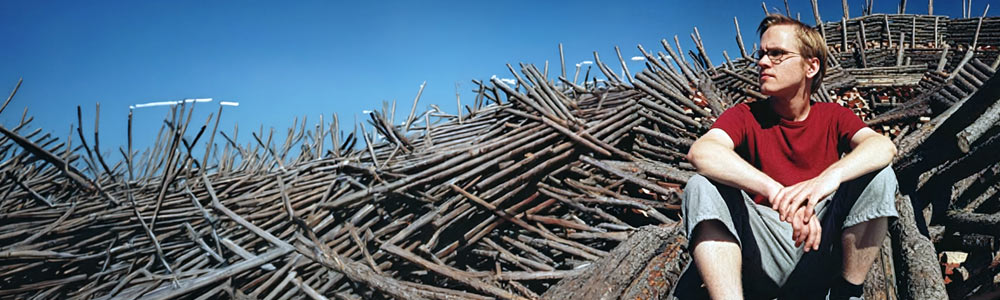
Long before Lassi Nikko was releasing records on Warp under the name Brothomstates, he was known to a much smaller, tighter-knit audience as Dune — one of the most respected musicians of the 1990s demoscene.
The Beginnings: A Kid in the Finnish Demoscene
Lassi Pekka Nikko started making music in the early 1990s, composing for demogroups under the handle Dune. He moved through several well-known Finnish groups — including Sonic PC, Jamm, and eventually Orange, the group he's most associated with — writing music trackers used in demos and intros, the small real-time audiovisual programs that defined the scene. His profile on Demozoo shows a busy production history stretching across multiple groups and years, and he was voted a top musician in reader polls of scene diskmags like Imphobia and Fleur during the mid-to-late '90s.
This was the era of tracker software — Scream Tracker, Fasttracker, and similar tools — where music was composed note-by-note in a grid, using sampled instruments squeezed into tiny file sizes to fit alongside real-time graphics code. Working within these extreme constraints shaped Dune's compositional habits early on: tight sample design, rhythmic precision, and melodies built to stand out even through a cheap soundcard.
Influence on the Demoscene
Dune's tracks were closely tied to some of the most celebrated productions of the era. One frequently cited example is the 64k intro Deesbab by Orange, released at The Party 1996, where his soundtrack is still discussed on Pouët.net — the central online archive and comment board for demoscene productions — as a defining part of the piece's atmosphere. Comments on the entry describe his music as distorted, atmospheric, and full of energy, reflecting the reputation he built among scene peers at the time.
Because tracker modules were traded and archived widely, his early work under the Dune alias remains preserved on scene archives like scene.org and is still referenced by demoscene historians as some of the more advanced musicianship of that generation — going beyond the beeps-and-arpeggios style common in early tracker music toward something more textured and song-like.
A Distinct Style
When Nikko transitioned to a wider audience as Brothomstates at the end of the '90s, the influence of his tracker years stayed audible. His sound blends deep IDM, drill and bass, and elements of Finnish experimental music into melodies and rhythms that are often described as complex and abstract, paired with drum programming that avoids conventional patterns in favor of odd, layered textures. Where much late-'90s IDM leaned heavily on the Aphex Twin/Warp template, Brothomstates carved out a more melodic, almost fragile identity — closer to downtempo or ambient than to dancefloor electronica, but with the rhythmic intricacy of someone who learned to program drums inside a tracker grid rather than on a drum machine.
Albums and Key Releases
| Release | Year | Label |
|---|---|---|
| kobn-tich-ey | 1998 | Self-released (MP3-only) |
| Brothom States EP | 2000 | Exogenic |
| Qtio | 2001 | Warp Records |
| Claro | 2001 | Warp Records |
| Rktic | 2004 | Arcola |
| Brothomstrain vs Blamstates | 2006 | Narita |
| Untitled | 2017 | Misc |
His debut, kobn-tich-ey, is notable beyond its music: it was among the very first albums ever released exclusively as an MP3-only LP, a genuinely unusual distribution choice in 1998, years before digital-only releases became normal. It was later remastered and reissued in 2020. After building a following through Exogenic's Brothom States EP, he signed to Warp Records in 2001, releasing the Qtio EP and the full-length Claro the same year — the release that introduced him properly to an international IDM audience. One track from the Qtio sessions, "Adozenaday," later found an unlikely second life soundtracking a UK television ad campaign for Sprite.
Airliner series
Brothomstates particularly recognized for his Airliner series. Created using tracker-based music production techniques, the Airliner works demonstrate his distinctive approach to electronic composition, combining intricate programming, carefully crafted samples, complex rhythmic structures, and atmospheric sound design. The series became notable within the tracker scene for pushing the creative and technical possibilities of tracker music beyond its traditional demoscene roots, while showcasing how sophisticated electronic compositions could be produced with the limited resources and highly structured workflow of tracker software.
- MusicBrainz — Lassi Nikko
- Discogs — Airliner Series
- Electronic Emotional Music Volume One — Lackluster
- Soundtracker Museum — Finnish Musicians
Legacy
Brothomstates is regularly cited as one of the most influential musicians to emerge from the Finnish demoscene, a scene that has produced a disproportionate number of respected electronic musicians relative to its size. His trajectory — from trading tracker modules in BBS archives to releasing on one of electronic music's most respected labels — is often held up as a template for how the demoscene functioned as an unofficial training ground for a generation of composers and sound designers.