Explore the museum
Explore the extensive and ever-growing collection of trackers for each platform, featuring detailed information.
Explore the extensive and ever-growing collection of trackers for each platform, featuring detailed information.
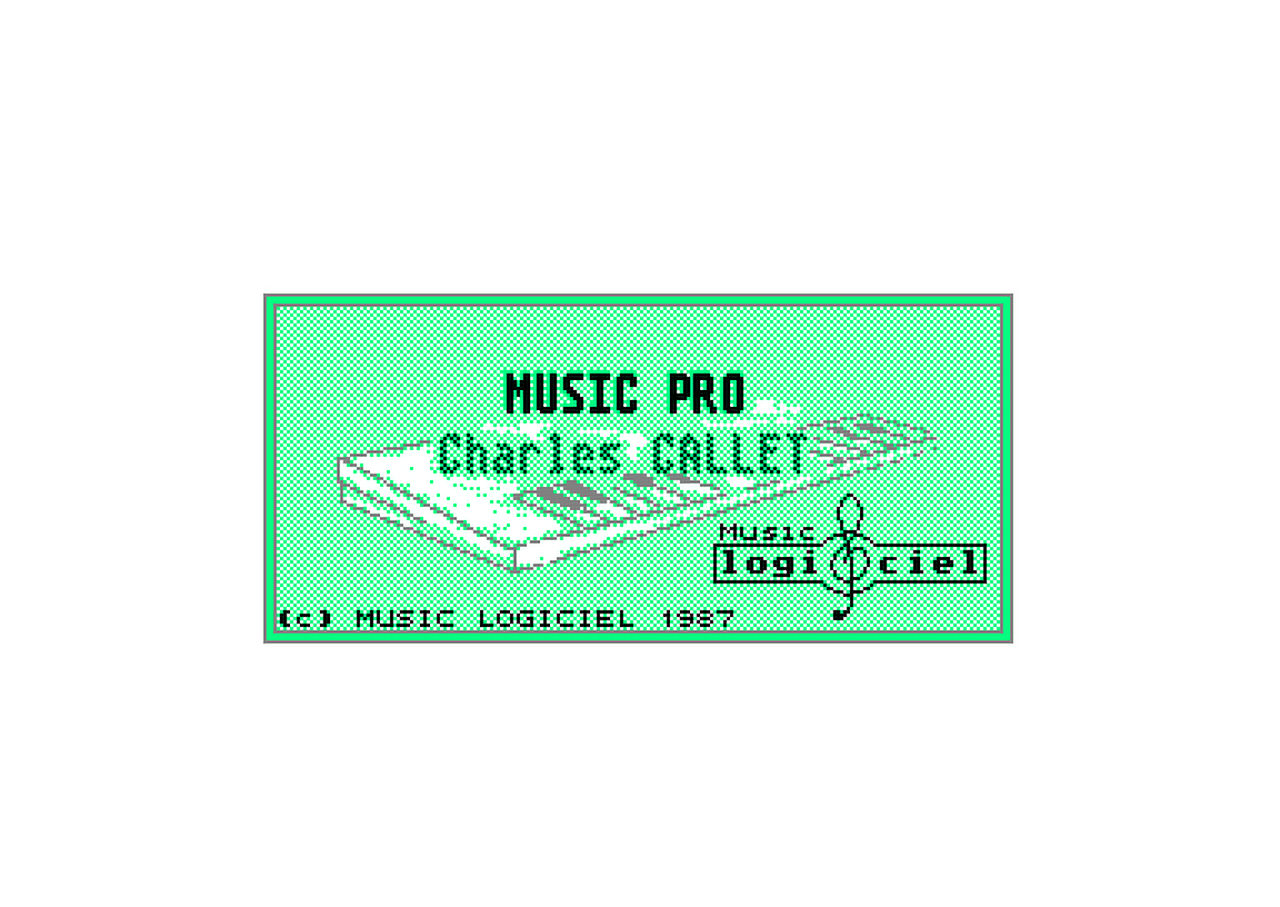
Music Pro is a French music editor, written by professional musician Charles Callet in assembly and sold by his company Music Logiciel for 295 F on tape and 350 F on disk.
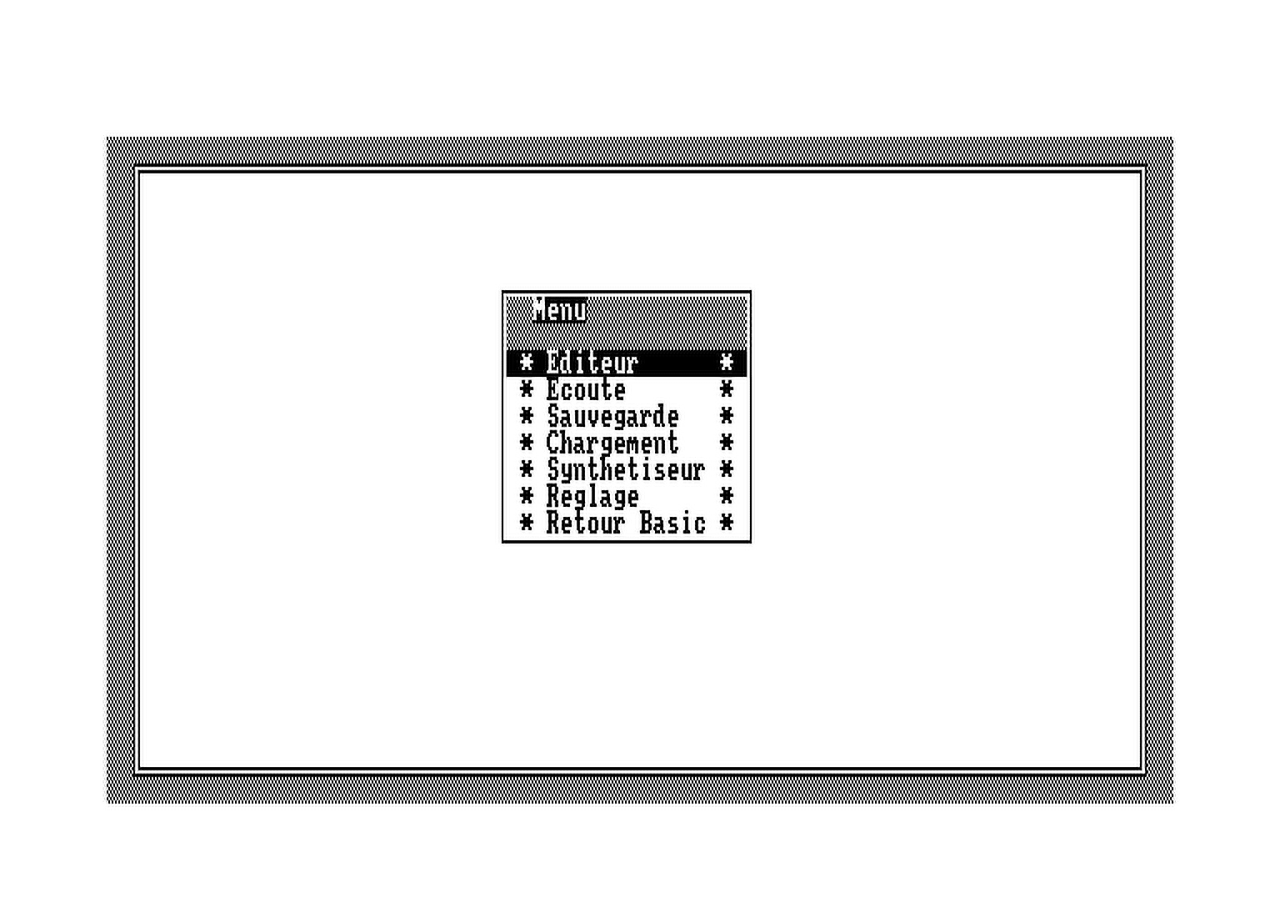
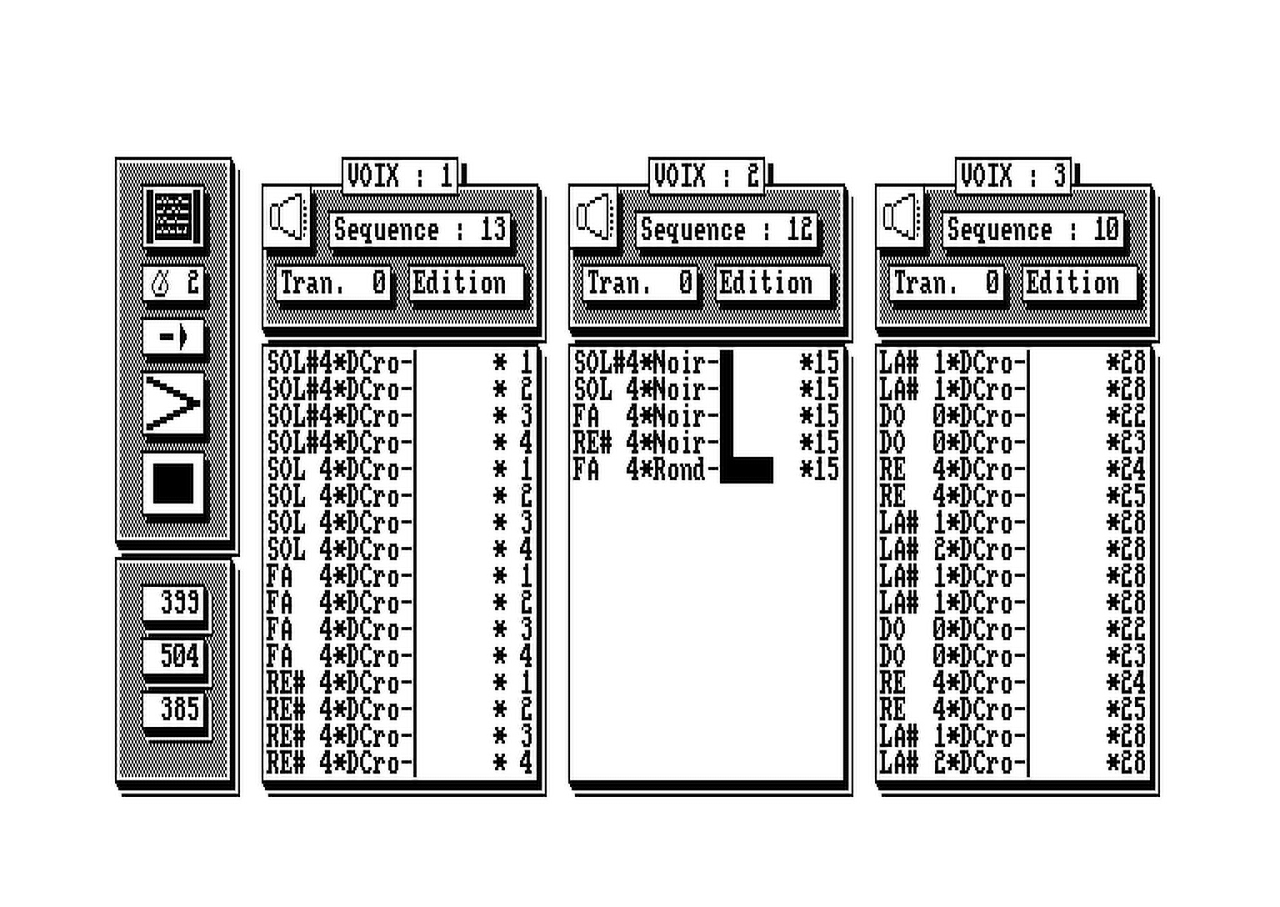
Unlike Callet's first editor, Amstradeus, Music Pro uses a sequencer approach instead of traditional notation. On each note, you enter pitch, duration, and instrument number out of 40. On each instrument, you choose a volume envelope, a pitch envelope (both out of 32), optional additional noise with either fixed pitch or envelope (out of 20), and an optional fixed square wave note. The latter two are useful for percussion.
The editor uses only two colors to allow a wider screen resolution, and you can choose between 6 color schemes. The 1989 Ubisoft re-release quizzes you for the birth or death year of a French 16th century composer before you can use it. Awkwardly, a few of the answers, nowadays found on the Internet, are not accepted. Also, notes are displayed two semitones lower than played, and keyboard control is either too fast or sluggish.
Songs can be embedded in games, but only at 8900hex. For his own use, Callet had drivers for Atari ST, Commodore 64, Amiga, PC Speaker, and Ad Lib Music Synthesizer Card. In early 1988, he announced an ST editor and a DOS editor which would support an unidentified extension card with two additional voices, but no C64 editor, as he thought there was no market. Whether anything was released is unknown, especially since in early 1990, Callet said the CPC editor was a commercial failure.
The software comes with a player capable of playing music in Basic or assembler programs. While Music Pro facilitates beautiful creations, the player is unfortunately not powerful enough to be used in programs that heavily use machine resources. As Charles Callet was a talented composer, he naturally used his software to provide sound for some Infogrames games such as Passengers on the Wind or The Amazing Shrinking Man. He also edited a compilation